Sourcing & Story
Everything starts at the source
The story behind every plate begins long before the pass — out on the South Downs farms and down at the Newhaven harbour. At a farm-to-table restaurant in Lewes, that isn't a slogan; it's a way of knowing exactly what you're cooking, and who grew it.
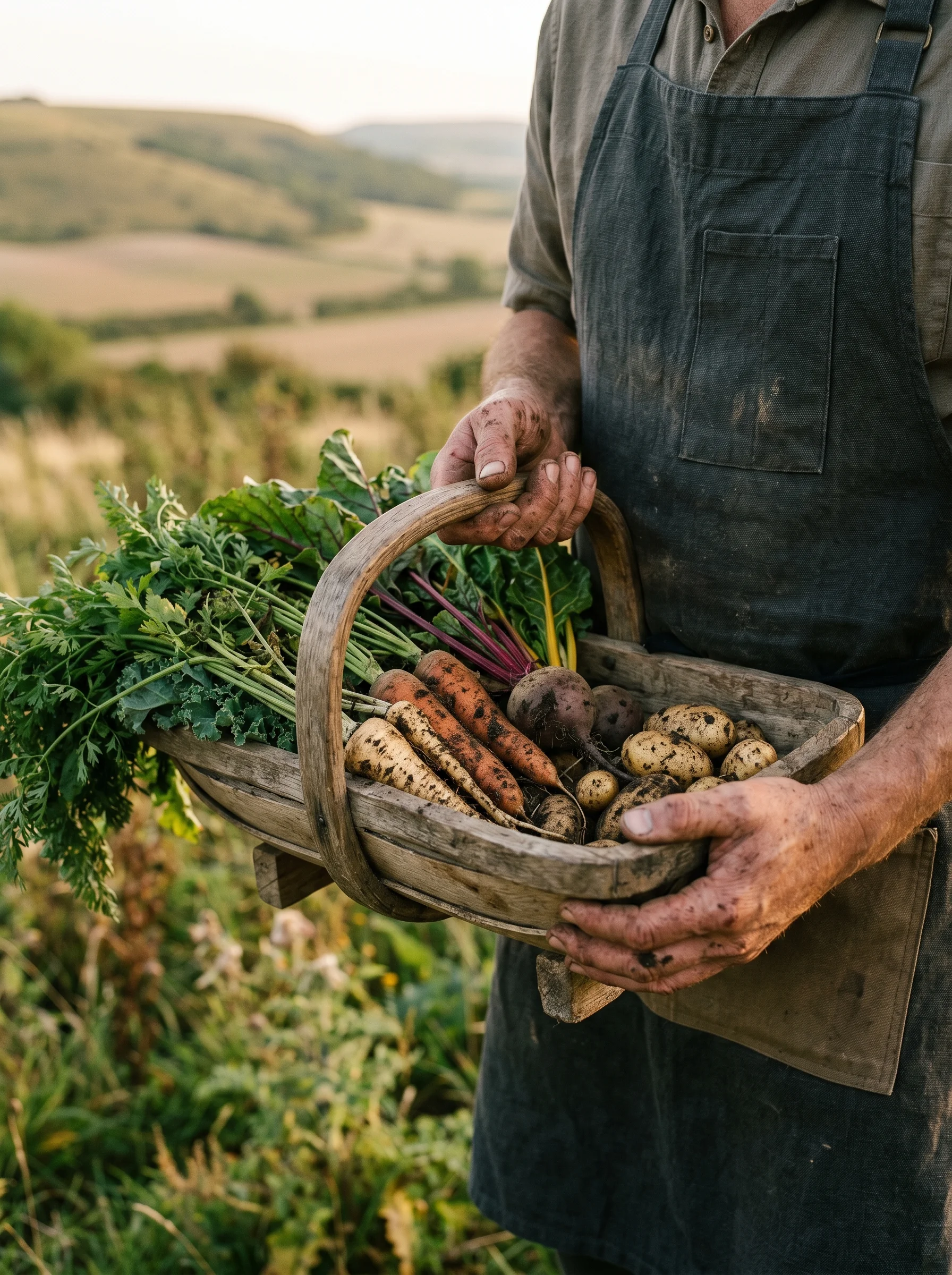
The Downs and the boats
Two landscapes feed this kitchen: the chalk hills of the South Downs and the working harbour at Newhaven. Between them they give us most of what ends up on the plate — picked, pulled and landed within a day of service.
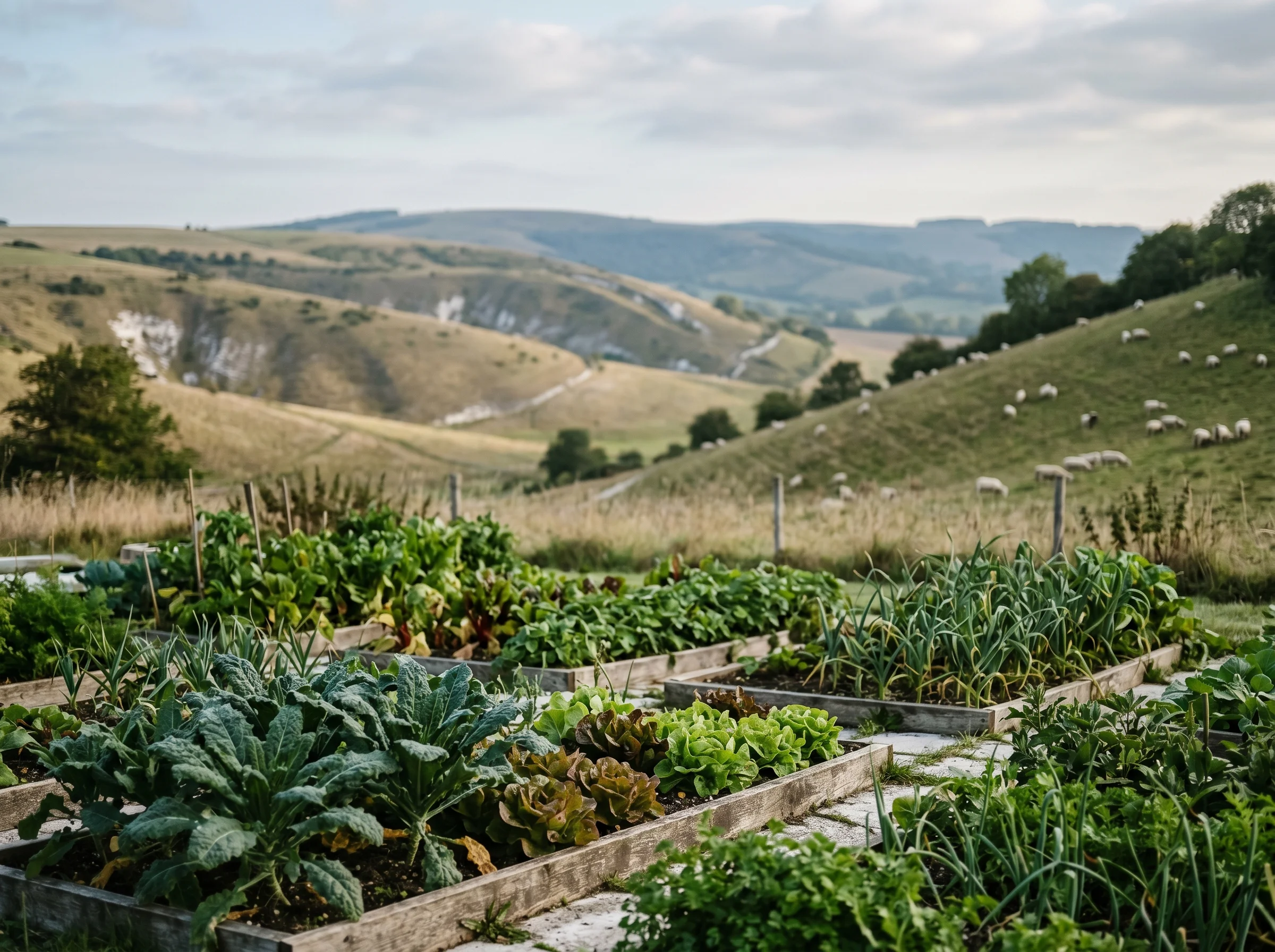
Farms, market gardens, grazing
Vegetables pulled the morning of service, hogget and Dexter beef reared on chalk pasture, ewe's curd and Sussex cheeses. The hills set the rhythm — we cook what's ready, while it's ready.
- Market garden veg — leaves, roots, squash, brassicas
- South Downs hogget & Dexter — pasture-reared, whole-carcass
- Dairy — ewe's curd, butter, aged hard cheeses
- Foraged — wild garlic, hedgerow fruit, elderflower
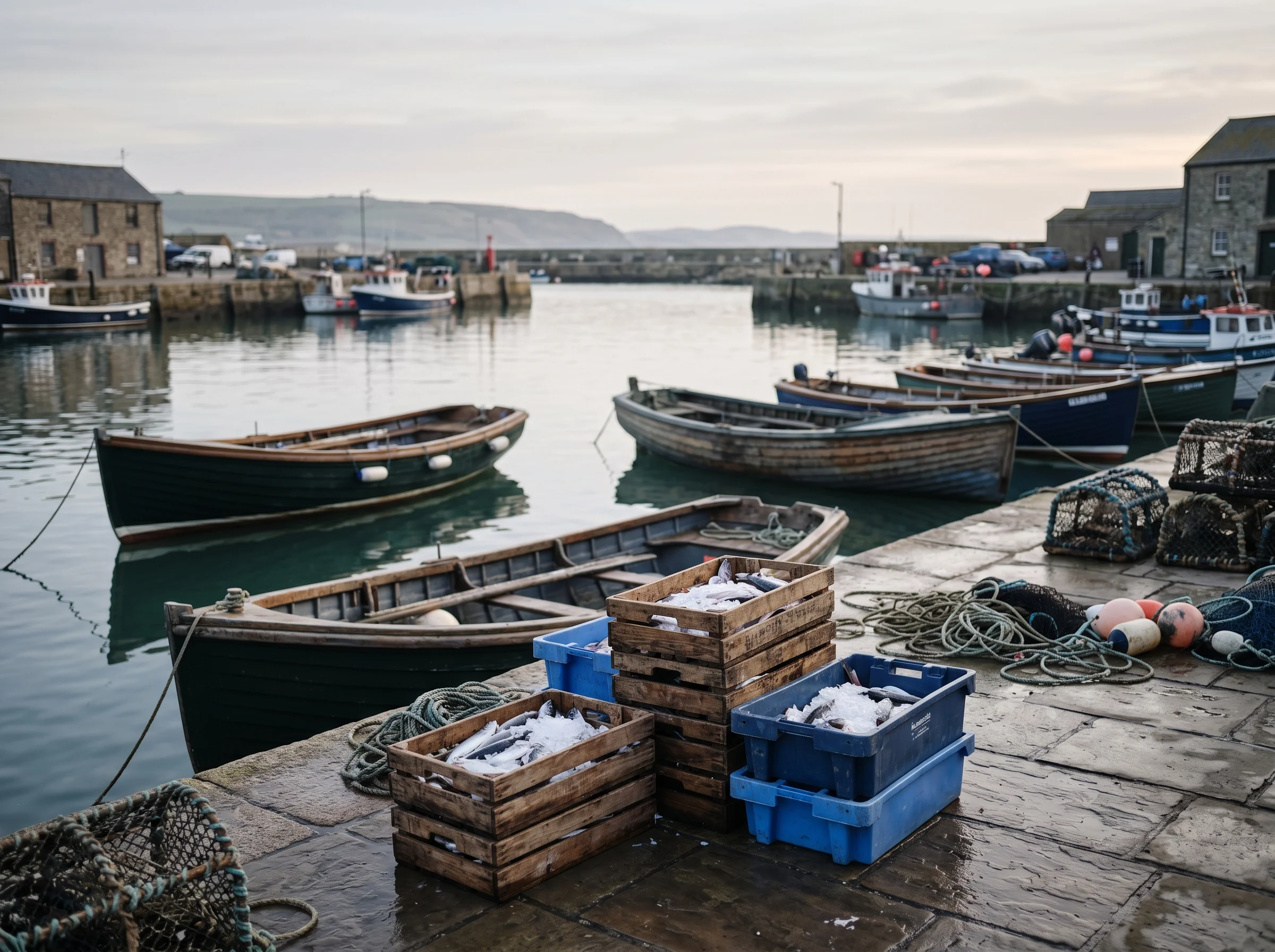
Newhaven day-boat catch
Whatever the small boats land that day — plaice, bream, crab, mackerel. We take the catch as it comes rather than ordering against it, so the fish on the sheet is genuinely the fish that came in.
- Day-boat fish — plaice, bream, gurnard, mackerel
- Shellfish — hand-picked crab, brown shrimp
- Landed daily — chosen at the quay, on the sheet by night
- Whole fish — used nose-to-tail, nothing wasted
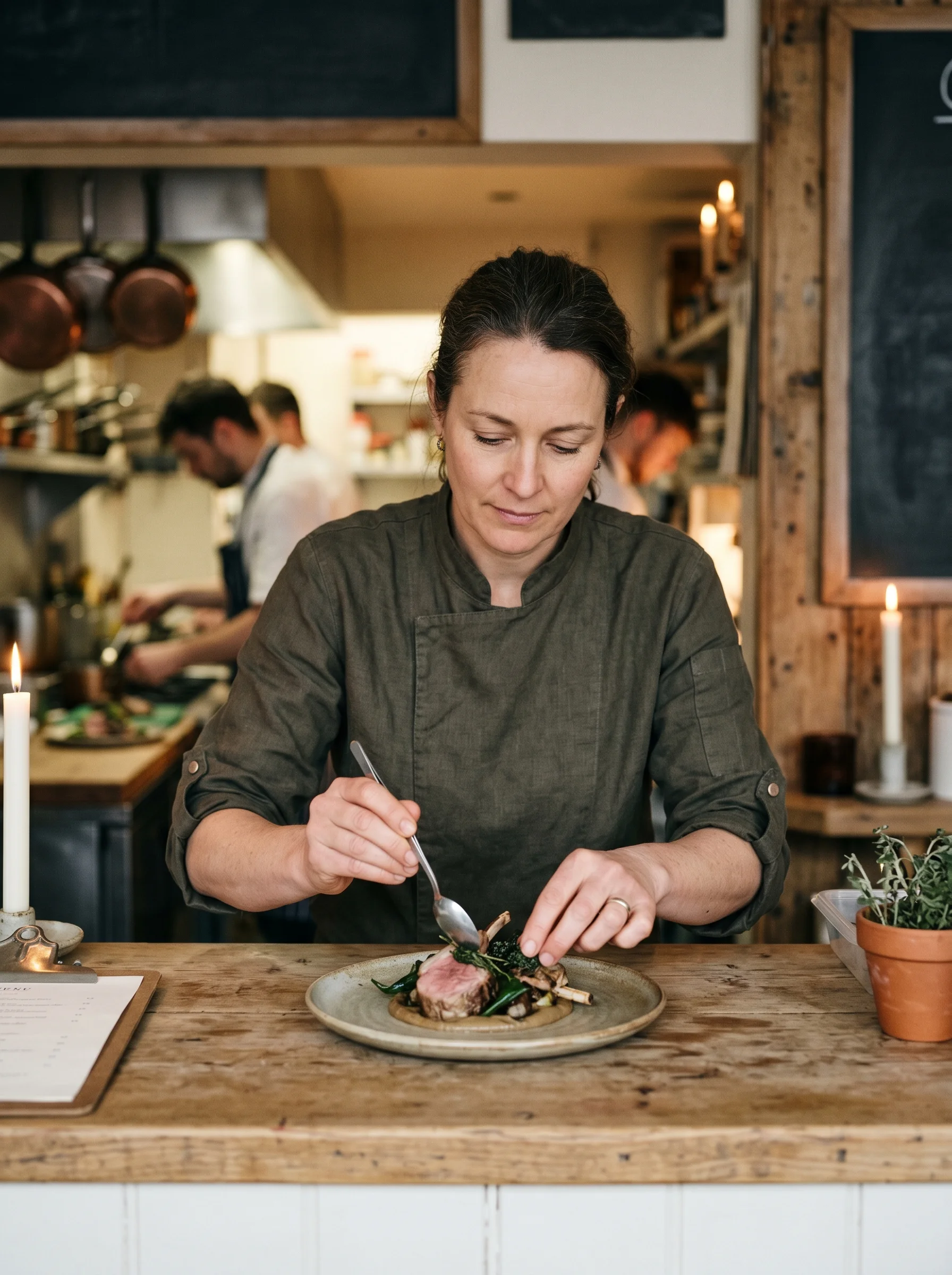
Mara's hands
After a decade in London kitchens, Mara Whitfield came home to Lewes to cook the way she always meant to — close to the land, with a short list of suppliers she could shake hands with. She does the buying herself, walks the farms, and stands at the pass every night the room is open.
Knowing where it comes from isn't a flourish for the menu; it's how she decides what to cook. The provenance leads, the dish follows — never the other way round.
"If I can't tell you who grew it or who landed it, it doesn't go on the sheet." Mara Whitfield, chef-owner
Cooking with the season
The calendar does the menu planning. Here's roughly how the year turns through the kitchen — though the sheet always bends to what actually turns up that week.
Wild garlic, Jersey Royals, sea trout, hogget, the first asparagus and sprouting broccoli.
The hungry gap gives way — green and bright after winter roots.
Day-boat plaice and bream, courgettes and their flowers, broad beans, soft fruit, tomatoes at last.
The boats are busy; plates get lighter, eaten by long evening light.
Crown Prince squash, field mushrooms, crab, quince and blackberries, the first proper braises.
Brown butter weather — the kitchen warms up, the room fills.
Dexter beef, celeriac and roots, brassicas, aged Sussex cheeses, bottled summer fruit.
Slow cooking and candlelight; the larder earns its keep.
What the growers say
The relationship runs both ways. The people who grow and land our food know their work ends up cooked with care — and they tell it better than we could.
"Mara takes the odd-shaped roots and the gluts nobody else wants, and turns them into the best thing on the menu. She buys the whole field, not just the pretty bits."
Tom Aldridge — market gardener, South Downs
"She'll take whatever we land, whatever the weather gives us. No fixed order, no fuss — just 'what's good today?' That's rare, and it means nothing's wasted."
Jen Voss — day-boat skipper, Newhaven
"Our hogget goes from the chalk pasture to her pass in a couple of days. You can taste that on the plate — and you can taste that she respects the animal."
Will Thursby — sheep farmer, near Lewes